
-
Engineering and Architecture
Exams
Colleges
Predictors
Resources
-
Computer Application and IT
Quick Links
Colleges
-
Pharmacy
Colleges
Resources
-
Hospitality and Tourism
Colleges
Resources
Diploma Colleges
-
Competition
Other Exams
Resources
-
School
Exams
Top Schools
Products & Resources
-
Study Abroad
Top Countries
Resources
-
Arts, Commerce & Sciences
Colleges
Upcoming Events
Resources
-
Management and Business Administration
Exams
Colleges & Courses
Predictors
-
Learn
Law Preparation
MBA Preparation
Engineering Preparation
Medical Preparation
-
Online Courses and Certifications
Top Streams
Specializations
- Digital Marketing Certification Courses
- Cyber Security Certification Courses
- Artificial Intelligence Certification Courses
- Business Analytics Certification Courses
- Data Science Certification Courses
- Cloud Computing Certification Courses
- Machine Learning Certification Courses
- View All Certification Courses
Resources
-
Medicine and Allied Sciences
Colleges
Predictors
Resources
-
Law
Resources
Colleges
-
Animation and Design
Exams
Predictors & Articles
Colleges
Resources
-
Media, Mass Communication and Journalism
Colleges
Resources
-
Finance & Accounts
Top Courses & Careers
Colleges
How to Find Hybridisation - (Concept)
How to find Hybridisation
The hybridisation depends upon sigma bonds and lone pair of electrons.
Thus,
Hybridisation = Number of sigma bonds + Number of lone pairs present on central atom
For example, hybridisation for NH3 is sp3 and its molecular geometry is tetrahedral.
NH3 has 3 sigma bonds and 1 lone pair, thus hybridisation for NH3:
3 sigma bonds + 1 lone pair = 4
Thus hybridisation for NH3 is sp3 and its geometry is tetrahedral.
sp Hybridization
This hybridization process involves mixing of the valence s orbital with one of the valence p orbitals to yield two equivalent sp hybrid orbitals that are oriented in a linear geometry as shown in the figure. The number of atomic orbitals combined always equals the number of hybrid orbitals formed. The p orbital is one orbital that can hold up to two electrons. The sp set is two equivalent orbitals that point 180oC from each other. The two electrons that were originally in the s orbital are now distributed to the two sp orbitals, which are half filled.

sp2 Hybridization
When 1 s-orbital and 2 p-orbitals are involved in the molecule formation then the equivalent set of orbitals are known as sp2 hybrid orbitals. These hybrid orbitals arrange themselves at an angle of 120oC as shown in the figure.

sp3 Hybridization
When 1 s-orbital and 3 p-orbitals are involved in the molecule formation then the equivalent set of orbitals are known as sp3 hybrid orbitals. The bond angle between these hybrid orbitals is 109oC as shown in the figure.

sp3d Hybridisation
When 1 s-orbital, 3 p-orbitals and 1 d-orbital are involved in the molecule formation then the equivalent set of orbitals are known as sp3d hybrid orbitals. There are two kinds of bonds formed for sp3d hybridisation, i.e, 2 axial bonds and 3 equatorial bonds. The angle between the axial bond and the equatorial plane is 90oC while the bond angle between the equatorial bonds is 120oC as shown in the figure given below:

sp3d2 Hybridization
When 1 s-orbital, 3 p-orbitals and 2 d-orbitals are involved in the molecule formation then the equivalent set of orbitals are known as sp3d2 hybrid orbitals. There are two kinds of bonds formed for sp3d2 hybridisation, i.e, 2 axial bonds and 4 equatorial bonds. The angle between the axial bond and the equatorial plane is 90oC while the bond angle between the equatorial bonds is 90oC as shown in the figure given below:

d2sp3 hybridisation
When 2 d-orbital, 1 s-orbital and 3 p-orbitals are involved in the molecule formation then the equivalent set of orbitals are known as d2sp3 hybrid orbitals. There are two kinds of bonds formed for sp3d2 hybridisation, i.e, 2 axial bonds and 4 equatorial bonds. The angle between the axial bond and the equatorial plane is 90oC while the bond angle between the equatorial bonds is 90oC as shown in the figure given below:
sp3d3 hybridization
When 1 s-orbital, 3 p-orbitals and 3 d-orbitals are involved in molecule formation then the equivalent set of orbitals are known as sp3d3 hybrid orbitals. The sp3d3 hybridization has a pentagonal bipyramidal geometry i.e., five bonds in a plane, one bond above the plane and one below it.

| Exam | Chapter |
| JEE MAIN | Chemical Bonding and Molecular Structure |
There is no change in the type of hybridisation when
| A. |
|
| B. |
|
| C. |
|
| D. |
|
Hybridisation of the nitrogen atom and electrons geometry around nitrogen atom in pyridine is
| A. |
|
| B. |
|
| C. |
|
| D. |
|
In allene (C3H4), the type(s) of hybridization of the carbon atoms is (are):
| A. |
|
| B. |
|
| C. |
|
| D. |
|
$$
\text { The hybridisation of orbitals of } \mathrm{N} \text { atom in } \mathrm{NO}_3^{-}, \mathrm{NO}_2^{+} \text {and } \mathrm{NH}_4^{+} \text {are respectively }
$$
| A. |
|
| B. |
|
| C. |
|
| D. |
|
The correct statement for the molecule is :
| A. |
|
| B. |
|
| C. |
|
| D. |
|
The correct statement about $\mathrm{ICl}_5$ and $\mathrm{ICl}_4^{-}$is:
| A. |
|
| B. |
|
| C. |
|
| D. |
|
The ion that has sp3d2 hybridization for the central atom is:
| A. |
|
| B. |
|
| C. |
|
| D. |
|
Which one of the following compounds has the smallest bond angle in its molecule?
| A. |
|
| B. |
|
| C. |
|
| D. |
|
The hybridisation at sulphur atom in SF2 , SF4 and SF6 respectively are:
| A. |
|
| B. |
|
| C. |
|
| D. |
|
The correct shape and I-I-I bond angles respectively in $I_3^{-}$ ion are :
| A. |
|
| B. |
|
| C. |
|
| D. |
|
In $\stackrel{1}{\mathrm{C}} \mathrm{H}_2=\stackrel{2}{\mathrm{C}}=\stackrel{3}{\mathrm{C}} \mathrm{H}-\stackrel{4}{\mathrm{C}} \mathrm{H}_3$ molecule, the hybridization of carbon $1,2,3$ and 4 respectively are:
| A. |
|
| B. |
|
| C. |
|
| D. |
|
The number of species below that have lone pairs of electrons in their central atom is ____________ (Rounded off to the nearest integer)
$\mathrm{SF}_4, \mathrm{BF}_4^{-}, \mathrm{CIF}_3, \mathrm{AsF}_3, \mathrm{PCl}_5, \mathrm{BrF}_5, \mathrm{XeF}_4, \mathrm{SF}_6$
| A. |
|
| B. |
|
| C. |
|
| D. |
|
If AB4 molecules is a polar molecule, a possible geometry of AB4 is :
| A. |
|
| B. |
|
| C. |
|
| D. |
|
The molecular geometry of $S F_6$ is octahedral . What is the geometry $S F_4$ of including lone pairs of electrons (if any)?
| A. |
|
| B. |
|
| C. |
|
| D. |
|
The reaction in which the hybridization of the underlined atom is affected is:
| A. |
|
| B. |
|
| C. |
|
| D. |
|
An hybridized orbital contains
| A. |
|
| B. |
|
| C. |
|
| D. |
|
What is the correct mode of hybridization of the central atom in the following compounds:
| A. |
|
| B. |
|
| C. |
|
| D. |
|
The molecular shapes of are
| A. |
|
| B. |
|
| C. |
|
| D. |
|
In $B r F_3$ molecule,the lone pairs occupy equatorial positions to minimize
| A. |
|
| B. |
|
| C. |
|
| D. |
|
The hybridization of P exhibited in$\mathrm{PF}_5$ is $\mathrm{sp}^{\mathrm{x}} \mathrm{d}^{\mathrm{y}}$..
The value of is _____________
| A. |
|
| B. |
|
| C. |
|
| D. |
|
In the structure of $\mathrm{SF}_4$, the lone pair of electrons on S is in.
| A. |
|
| B. |
|
| C. |
|
| D. |
|
Consider the species $\mathrm{CH}_4, \mathrm{NH}_4^{+}$and $\mathrm{BH}_4^{-}$. Choose the correct option with respect to the three species.
| A. |
|
| B. |
|
| C. |
|
| D. |
|
Match List I with List II :
$$
\begin{array}{|c|c|}
\hline \begin{array}{c}
\text { List I } \\
\text { (molecule) }
\end{array} & \begin{array}{c}
\text { List II } \\
\text { (hybridization ; shape) }
\end{array} \\
\hline \text { A. } \mathrm{XeO}_3 & \text { I. } \mathrm{sp}^3 \mathrm{~d} \text {; linear } \\
\hline \text { B. } \mathrm{XeF}_2 & \text { II. } \mathrm{sp}^3 ; \text { pyramidal } \\
\hline \text { C. } \mathrm{XeOF}_4 & \text { III. } \mathrm{sp}^3 \mathrm{~d}^3 ; \text { distorted octahedral } \\
\hline \text { D. } \mathrm{XeF}_6 & \text { IV. } \mathrm{sp}^3 \mathrm{~d}^2 ; \text { square pyramidal } \\
\hline
\end{array}
$$
Choose the correct answer from the options given below:
| A. |
|
| B. |
|
| C. |
|
| D. |
|
The hybridisations of the atomic orbitals of nitrogen in $\mathrm{NO}_2^{-}, \mathrm{NO}_2^{+}$and $\mathrm{NH}_4^{+}$ respectively are
| A. |
|
| B. |
|
| C. |
|
| D. |
|
Match List-I with List-II :
|
List-I (Species) |
List-II (Hybrid Orbitals) |
| $(a) S F_4$ | (i) $s p^3 d^2$ |
| (b) $I F_5$ | $(i i) d^2 s p^3$ |
| (c) $\mathrm{NO}_2^{+}$ | $\left.(i i i) s p^3 d\right)$ |
| (d) $\mathrm{NH}_4^{+}$ | $(i v) s p^2$ |
| $(v) s p$ |
Choose the correct answer from the options given below:
| A. |
|
| B. |
|
| C. |
|
| D. |
|
XeO4 molecular is tetrahedral having:
| A. |
|
| B. |
|
| C. |
|
| D. |
|
Trigonal bipyramidal geometry is shown by :
| A. |
|
| B. |
|
| C. |
|
| D. |
|
Which has trigonal bipyramidal shape?
| A. |
|
| B. |
|
| C. |
|
| D. |
|
In which of the following sets central atom of each member involves hybridisation?
| A. |
|
| B. |
|
| C. |
|
| D. |
|
Which of the following statement is true for $\left[I O_2 F_2\right]^{-}$according to VSEPR theory?
| A. |
|
| B. |
|
| C. |
|
| D. |
|
Consider and
Amongst the above molecule the number of molecule
having
hybridisation is _____________.
| A. |
|
| B. |
|
| C. |
|
| D. |
|
The number of sp2 hybridized carbons present in "Aspartame" is________.
| A. |
|
| B. |
|
| C. |
|
| D. |
|
sp3d2 hybridization is not displayed by :
| A. |
|
| B. |
|
| C. |
|
| D. |
|
The species in which the N atom is in a state of sp hybridization is
| A. |
|
| B. |
|
| C. |
|
| D. |
|
Which of the following conversions involves change in both shape and hybridisation ?
| A. |
|
| B. |
|
| C. |
|
| D. |
|
Which one of the following has the regular tetrahedral structure?
(Atomic no. B = 5, S = 16, Ni = 28, Xe = 54)
| A. |
|
| B. |
|
| C. |
|
| D. |
|
The incorrect geometry is represented by :
| A. |
|
| B. |
|
| C. |
|
| D. |
|
The structure of $I F_7$ is
| A. |
|
| B. |
|
| C. |
|
| D. |
|
The group having triangular planar structures is :
| A. |
|
| B. |
|
| C. |
|
| D. |
|
(I) (II)
H –– N - - - N - - - N
In hydrogen azide (above) the bond orders of bonds (I) and (II) are :
| A. |
|
| B. |
|
| C. |
|
| D. |
|
The correct sequence of decreasing number of π-bonds in the structures of H2SO3, H2SO4 and H2S2O7 is :
| A. |
|
| B. |
|
| C. |
|
| D. |
|
Hybridisation of XeF6 is:
| A. |
|
| B. |
|
| C. |
|
| D. |
|
The shape of $X e O F_2$ is
| A. |
|
| B. |
|
| C. |
|
| D. |
|
Identify from the following species in which $\mathrm{d}^2 \mathrm{sp}^3$ hybridization is shown by central atom:
| A. |
|
| B. |
|
| C. |
|
| D. |
|
In which of the following species the interatomic bond angle is
| A. |
|
| B. |
|
| C. |
|
| D. |
|
Which is an example of Sp3 hybridization
| A. |
|
| B. |
|
| C. |
|
| D. |
|
which of the following shape is not possible in $\mathrm{Sp}^3 \mathrm{~d}^2$ hybridisation
| A. |
|
| B. |
|
| C. |
|
| D. |
|
In sp2 hybridisation. which of the following options is incorrect?
| A. |
|
| B. |
|
| C. |
|
| D. |
|
which of the following has 50% S hybridized orbital
| A. |
|
| B. |
|
| C. |
|
| D. |
|
What is the magnetic moment of CO molecule
| A. |
|
| B. |
|
| C. |
|
| D. |
|
Total number of species from the following with central atom utilising $2 p^2$ hybrid orbitals for bonding is.............
$\mathrm{NH}_3, \mathrm{SO}_2, \mathrm{SiO}_2, \mathrm{BeCl}_2, \mathrm{C}_2 \mathrm{H}_2, \mathrm{C}_2 \mathrm{H}_4, \mathrm{BCl}_3, \mathrm{HCHO}$,
$\mathrm{C}_6 \mathrm{H}_6, \mathrm{BF}_3, \mathrm{C}_2 \mathrm{H}_4 \mathrm{Cl}_2$
| A. |
|
| B. |
|
| C. |
|
| D. |
|
which of the following inferences is correct for the statements given below:
Statement I: $\mathrm{ClF}_2^{+}$ion is bent, but $\mathrm{ClF}_2^{-}$is linear
Statement II: Salt-like $\mathrm{KHF}_2$ is stable, however, $\mathrm{KHCl}_2$ is not known.
Statement III: Cyanides are insoluble in water, but alkyl isocyanides are readily soluble in water.
| A. |
|
| B. |
|
| C. |
|
| D. |
|
Among the following transformations,the hybridization of the central atom remains unchanged in
A) $\mathrm{CO}_2 \rightarrow \mathrm{HCOOH}$
B) $B F_3 \rightarrow B F_4^{-}$
C) $\mathrm{NH}_3 \rightarrow \mathrm{NH}_4^{+}$
D) $\mathrm{PCl}_3 \rightarrow \mathrm{PCl}_5$
| A. |
|
| B. |
|
| C. |
|
| D. |
|
The compound containing sp hybridized carbon atom are
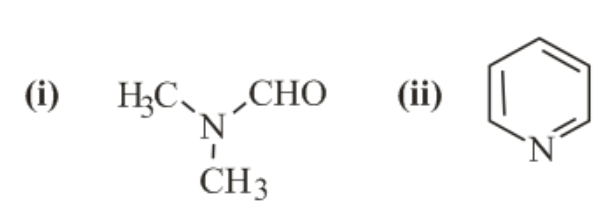
(iii) $\mathrm{H}_3 \mathrm{C}-\mathrm{CN}$
(iv) $\mathrm{H}_2 \mathrm{C}=\mathrm{C}=\mathrm{CH}-\mathrm{CH}_3$
| A. |
|
| B. |
|
| C. |
|
| D. |
|
The hybridization of xenon atom in $\mathrm{XeF}_4$ is:
| A. |
|
| B. |
|
| C. |
|
| D. |
|
The hybridizatios of $N, C$ and $O$ shown in the following compound respectively,are:
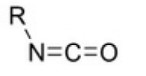
| A. |
|
| B. |
|
| C. |
|
| D. |
|
The number of $s p^2$ hybridized carbon atoms in

is:
| A. |
|
| B. |
|
| C. |
|
| D. |
|
In the given structure, number of sp and $\mathrm{sp}^2$ hybridized carbon atoms present respectively are :
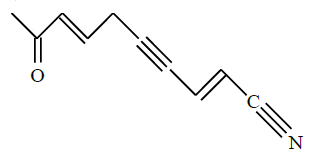
| A. |
|
| B. |
|
| C. |
|
| D. |
|
Isostructural species are those which have the same shape and hybridization. Among the given species identify the isostructural pairs.
| A. |
|
| B. |
|
| C. |
|
| D. |
|
The types of hybrid orbitals of nitrogen in $\mathrm{NO}_2^{+}, \mathrm{NO}_3^{-}$and $\mathrm{NH}_4^{+}$respectively are expected to be
| A. |
|
| B. |
|
| C. |
|
| D. |
|
Which of the following compounds contain all the carbon atoms in the same hybridisation state?
$\begin{aligned} & \text { (i) } \mathrm{H}-\mathrm{C} \equiv \mathrm{C}-\mathrm{C} \equiv \mathrm{C}-\mathrm{H} \\ & \text { (ii) } \mathrm{CH}_3-\mathrm{C} \equiv \mathrm{C}-\mathrm{CH}_3 \\ & \text { (iii) } \mathrm{CH}_2=\mathrm{C}=\mathrm{CH}_2 \\ & \text { (iv) } \mathrm{CH}_2=\mathrm{CH}-\mathrm{CH}=\mathrm{CH}_2\end{aligned}$
| A. |
|
| B. |
|
| C. |
|
| D. |
|
In the equation A + 2B + H2O → C + 2D
where A = HNO2 ; B = H2SO3 ; C = NH2OH
Identify the geometry and hybridisation of (D)
| A. |
|
| B. |
|
| C. |
|
| D. |
|
In the following molecule:

Hybridization of Carbon a,b and c respectively are:
| A. |
|
| B. |
|
| C. |
|
| D. |
|
In the hybridisation of one $s$ and one $p$ orbitals, we get
| A. |
|
| B. |
|
| C. |
|
| D. |
|
In which of the following compounds the hybridisation of nitrogen sp2 ?
| A. |
|
| B. |
|
| C. |
|
| D. |
|
In which of the following species is the underlined carbon having $s p^3$ hybridisation?
| A. |
|
| B. |
|
| C. |
|
| D. |
|
In which one of the following pairs the central atoms exhibit $\mathrm{sp}^2$ hybridization?
| A. |
|
| B. |
|
| C. |
|
| D. |
|
Number of species which have $s p^3$ hybridisation of at least one atom?
$\mathrm{NaBH}_4, \quad \mathrm{~N}\left(\mathrm{CH}_3\right)_3, \quad \mathrm{P}\left(\mathrm{CH}_3\right)_3 \mathrm{F}_2, \mathrm{H}_3 \mathrm{PO}_4, \mathrm{C}_3 \mathrm{O}_2$
| A. |
|
| B. |
|
| C. |
|
| D. |
|
Which of the following pairs of ions are isoelectronic and isostructural?
| A. |
|
| B. |
|
| C. |
|
| D. |
|
The molecular shapes of $\mathrm{SF}_4, \mathrm{CF}_4$ and $\mathrm{XeF}_4$ are
| A. |
|
| B. |
|
| C. |
|
| D. |
|
The number of $90^{\circ}$ angle in $I F_5$ are
| A. |
|
| B. |
|
| C. |
|
| D. |
|
The type of hybridisation and magnetic property of the complex $\left[\mathrm{MnCl}_6\right]^{3-}$, respectively, are :
| A. |
|
| B. |
|
| C. |
|
| D. |
|
The type of hybridisation and number of lone pair (s) of electrons of Xe in $\mathrm{XeOF}_4$ respectively, are :
| A. |
|
| B. |
|
| C. |
|
| D. |
|
In $\mathrm{SO}_2, \mathrm{NO}_2^{-}$and $\mathrm{N}_3^{-}$the hybridizations at the central atom are respectively :
| A. |
|
| B. |
|
| C. |
|
| D. |
|
Which of the following statement is true with respect to $\mathrm{H}_2 \mathrm{O}, \mathrm{NH}_3$ and $\mathrm{CH}_4$ ?
A. The central atoms of all the molecules are $s p^3$ hybridized
B. The $\mathrm{H}-\mathrm{O}-\mathrm{H}, \mathrm{H}-\mathrm{N}-\mathrm{H}$ and $\mathrm{H}-\mathrm{C}-\mathrm{H}$ angles in the above molecules are $104.5^{\circ}, 107.5^{\circ}$ and $109.5^{\circ}$, respectively.
C. The dipole moment is $\mathrm{H}_2 \mathrm{O}$ more than $\mathrm{NH}_3$, which is more than $\mathrm{CH}_4$.
D. Both $\mathrm{H}_2 \mathrm{O}$ and $\mathrm{NH}_3$ are Lewis acids and $\mathrm{CH}_4$ is a Lewis base.
E. Aquoeus ammonium solution is not acidic in nature. In this solution $\mathrm{NH}_3$ and $\mathrm{H}_2 \mathrm{O}$ act as Lowry-Bronsted acid and base respectively.
Choose the correct answer from the options given below:
| A. |
|
| B. |
|
| C. |
|
| D. |
|
There are various types of hybridisation involving s, p and d orbitals. The different types of hybridisation are as under:
