-
Engineering and Architecture
Exams
Colleges
Predictors
Resources
-
Computer Application and IT
Quick Links
Colleges
-
Pharmacy
Colleges
Resources
-
Hospitality and Tourism
Colleges
Resources
Diploma Colleges
-
Competition
Other Exams
Resources
-
School
Exams
Top Schools
Products & Resources
-
Study Abroad
Top Countries
Resources
-
Arts, Commerce & Sciences
Colleges
Upcoming Events
Resources
-
Management and Business Administration
Exams
Colleges & Courses
Predictors
-
Learn
Law Preparation
MBA Preparation
Engineering Preparation
Medical Preparation
-
Online Courses and Certifications
Top Streams
Specializations
- Digital Marketing Certification Courses
- Cyber Security Certification Courses
- Artificial Intelligence Certification Courses
- Business Analytics Certification Courses
- Data Science Certification Courses
- Cloud Computing Certification Courses
- Machine Learning Certification Courses
- View All Certification Courses
Resources
-
Medicine and Allied Sciences
Colleges
Predictors
Resources
-
Law
Resources
Colleges
-
Animation and Design
Exams
Predictors & Articles
Colleges
Resources
-
Media, Mass Communication and Journalism
Colleges
Resources
-
Finance & Accounts
Top Courses & Careers
Colleges
Graphical Transformation (involve modulus) - (Concept)
$
f(x) \rightarrow|f(x)|
$
When $y=f(x)$ given
Leave the positive part of $f(x)$ (the part above the $x$-axis) as it is
Now, take the image of the negative part of $f(x)$ (the part below the $x$-axis) about the $x$-axis.
OR
Take the mirror image in the $x$-axis of the portion of the graph of $f(x)$ which lies below the $x$-axis
For Example:


y=x3 y=|x3| y=|x3| and y=x3
Transformation $\mathrm{f}(\mathrm{x}) \rightarrow \mathrm{f}(|\mathrm{x}|) \mid$
When $y=f(x)$ given
Leave the graph lying right side of the $y$-axis as it is
The part of $f(x)$ lying on the left side of the $y$-axis is deleted.
Now, on the left of the $y$-axis take the mirror image of the portion of $f(x)$ that lying on the right side of the $y$-axis.
For Example:


y = f(x) y = f(x) and y = f(|x|) y = f(|x|)
Transformation $\mathrm{f}(\mathrm{x}) \rightarrow|\mathrm{f}(|\mathrm{x}|)|$
First $\mathrm{f}(\mathrm{x})$ is transforms to $|\mathrm{f}(\mathrm{x})|$
Then $|f(x)|$ transforms to $|\mathrm{f}(|\mathrm{x}|)|$
Or
(i) $f(x) \rightarrow|f(x)| \quad$ (ii) $f(x) \rightarrow f(|x|) \mid$
For Example:
y = f(x) y = |f(x)| y = f(|x|)


y = |f(|x|)|

$\begin{aligned} & y=f(x) \rightarrow|y|=f(x) \\ & y=f(x) \text { is given }\end{aligned}$
Remove the part of the graph which lies below X-axis
Plot the remaining part
take the mirror image of the portion that lies above the x-axis about the x-axis.
| Exam | Chapter |
| JEE MAIN | Sets, Relations and Functions |
The area bounded by the lines $y=||x-1|-2|$ and $\mathrm{y}=2$ is
| A. |
|
| B. |
|
| C. |
|
| D. |
|
The number of elements in the set $\left \{ x\epsilon \mathbb{R}:\left ( \left | x \right | -3\right ) \left | x+4 \right |=6\right \}$ is equal to :
| A. |
|
| B. |
|
| C. |
|
| D. |
|
Which of the following is the graph of $|y|=\cos x$?
| A. |
|
| B. |
|
| C. |
|
| D. |
|
The number of solutions of $|\cos x|=\sin x$, such that $-4 \pi \leq x \leq 4 \pi$ is :
| A. |
|
| B. |
|
| C. |
|
| D. |
|
Let $f(x)=\left|2 x^2+5\right| x|-3|, x \in R$. If $m$ and $n$ denote the number of points where $f$ is not continuous and not differentiable respectively, then $m+n$ is equal to:
| A. |
|
| B. |
|
| C. |
|
| D. |
|
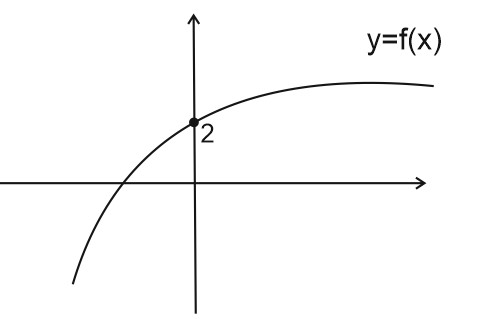
If the graph of $y=f(x)$ is as shown below then the graph of $y=f(|x|)$ is
| A. |
|
| B. |
|
| C. |
|
| D. |
|
If the graph of $y=x^{2}-3x+2$ is
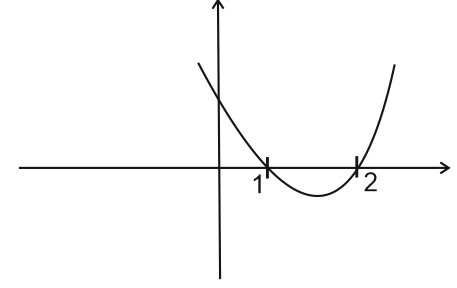
then the graph of $y=||x^2|-3|x|+2|$ is
| A. |
|
| B. |
|
| C. |
|
| D. |
|
Which of the following is the graph of $y=\frac{1}{2} \cos x$ ?
| A. |
|
| B. |
|
| C. |
|
| D. |
|
Which of the following is the graph of $y=4^{-x}$?
| A. |
|
| B. |
|
| C. |
|
| D. |
|
Let $\mathbb{R}$ be the set of real numbers and $f: \mathbb{R} \rightarrow \mathbb{R}_{\text {be given by }} f(x)=\sqrt{|x|}-\log (1+|x|)$ We now make the following assertions:
I. There exists a real number $A$ such that $f(x) \leq A_{\text {for all } x \text {. }}$.
II. There exists a real number such that $f(x) \geq B$ for all $x$.
| A. |
|
| B. |
|
| C. |
|
| D. |
|